Side Area Image

Douglas Century is the author or coauthor of numerous bestselling and critically acclaimed books. Century has also spoken at numerous venues across the United States and Canada, including McGill University, Williams College, John Jay College of Criminal Justice, Temple Emanu-El and the New York Public Library. Century‘s work received Permanent of Canada Award for Short Fiction (Second Prize); the Geraldine Griffin Moore Award for the Short Story; the Harold Greenberg Fund for screenplay adaptation of an original book; and, most recently, a New York State Council for the Humanities Grant for Barney Ross.

Represented by International Creative Management, Century is a member of the Writers Guild of America, East and of the Writers Guild of Canada.

douglas@douglascentury.com
+ 01145928421
douglas@douglascentury.com

E X C E R P T  F R O M

Crash of the Heavens

The untold story of how Hannah Senesh saved a young Jewish woman
from near-certain death at the hands of the Gestapo—and the
ongoing family legacy of her act of selfless bravery


August 1944
Gyorskocsi Street Gestapo Prison
Budapest, Hungary

In mid-August 1944, Hannah Senesh was given a new cellmate: a woman in her midtwenties, hair bedraggled, eyes swollen, showing the signs of bruising that reflected the torture she’d been undergoing daily at the hands of the Gestapo.

Her name was Matilda Glattstein.

Originally from a small town in Slovakia, Matilda, her husband, Eliezar, and their young daughter, Tova, had been in hiding for more than two years. In March 1942, when the Nazis had begun rounding up Slovak Jews and deporting them to Auschwitz and Majdanek, Matilda and her family had fled into the forest.
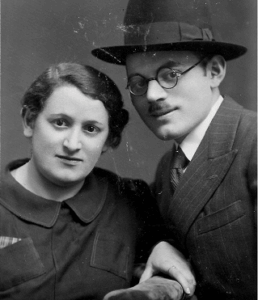
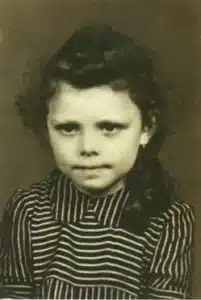
They couldn’t survive outdoors long—Tova being only two years old at the time—so the Glattstein family, along with Matilda’s sister, Hilda, had obtained forged identity papers and had arrived in Budapest in late 1942. Budapest had proven to be a safe refuge, until March 19, 1944, when the Germans had occupied Hungary and Adolf Eichmann had arrived in the capital to organize the rapid liquidation of Hungary’s Jews.

Matilda had decided to put Tova, now almost five years old, into a convent, pretending that she was a Roman Catholic orphan.

She and Eliezer had found separate hideouts, meeting only infrequently in a public park. One morning in July 1944, Matilda had been stopped by gendarmes for questioning; her forged papers and broken Hungarian had been an instant giveaway. She had been taken to the Gestapo prison for questioning and roughed up by the guards.

The Gestapo suspected her of espionage. But Matilda Glattstein was no spy. No matter how much they threatened her, she had no military intelligence to divulge.

She did, however, have a secret that she’d managed to conceal from the Gestapo now for two weeks. It was a secret she wouldn’t be able to keep for much longer, a secret she felt she needed to now confide to Hannah:

Matilda was pregnant.

She said she was expecting the baby in February.

Hannah grimaced. There was no way the Gestapo would allow a woman to give birth to a baby in prison. If they found out, she’d be killed instantly.

By now Hannah was an expert in the methods of the Gestapo and the Hungarian military police. She’d experienced and survived the worst physical and mental torture. She also knew all the Gestapo’s threats and bluffs.

The prison commandant, S.S. Hauptscharführer Werner Lemke, was a sadist known for personally beating his prisoners for the slightest infractions. Lemke had been nicknamed “Flammke”—from the German word Flamme (“flame”)—because of the white-hot intensity of his rages. He’d often beat a prisoner unconscious with his black-gloved hands and use the toe of his knee-high boots to kick them in the ribs once they were on the concrete floor.

In their communal cell, with its barred windows, the two women huddled together. As they talked, Hannah showed off her many handmade dolls. She pretended to be giving Matilda lessons in dollmaking, but she was secretly giving her lessons on how to behave during interrogations.

The next time they took her for questioning, Hannah said, before the Gestapo men were fully focused, she should palm the forged identity document from the table, ask to use the bathroom, and destroy the paper in the toilet. That way, Hannah reasoned, the Gestapo couldn’t legally incriminate her.

Matilda followed the advice, but it backfired: by destroying her incriminating forged papers, she looked even more guilty of espionage.

Matilda was subjected to daily torture—the same sorts of merciless beatings and floggings Hannah had endured. After the torture and interrogation sessions, she’d be shoved back into the cell, covered with welts and cuts.

Hauptscharführer Lemke had laughed at Matilda’s feeble attempt to trick him. “You think I need some document to execute you?” he said. “I can execute you anytime I like.”

Hannah now told Matilda that she could no longer stay in prison. “We’ll have to get you out.”

“Get me out?” Matilda thought Hannah must be making a cruel joke.

“You’ll need to go through the window—it’s risky but with some luck, you’ll make it.”

Matilda stared at Hannah as if she were a madwoman. Who could pry open those iron bars?

“Listen,” Hannah whispered: above them, on the third floor, was an infirmary. The windows there weren’t barred. “And in your sickbed, you won’t be watched around the clock.” It was possible to escape through the window.

Matilda listened to Hannah laying out the plan in slow, logical detail. The trickiest part of the plan was the first step: Matilda would have to suffer a real injury.

“When you’re taken for questioning, you’ll fall down the stairs. Of course, land on your backside—protect the fetus—but you’ll need to twist or sprain an ankle, a wrist, a knee.”

As Hannah spoke, Matilda began to panic. The scheme sounded too complex, too convoluted, its odds of success too low.

Odds? Hannah asked. And what were Matilda’s odds if she stayed? A pregnant woman? Beaten daily? Even if she didn’t miscarry, did she honestly think that S.S. Hauptscharführer Lemke would allow her to bring a Jewish child into the world?

Matilda reluctantly agreed. She asked Hannah to repeat herself, memorizing the steps again.

But she wondered: Wasn’t the plan one Hannah could use to save herself? Why had she not tried to break out of a window in the third-floor infirmary?

“They know I’m a British paratrooper—but they’re accusing me of espionage and of treason—unlike you, I was born here. They’ll likely put me on trial before a military court. It’s just a matter of time.”

With the Red Army rolling relentlessly westward, with the Americans and British having landed in Normandy and liberated much of France, with the attempted assassination of Hitler in July, even the most die-hard Nazis knew that the German military could no longer win the war.

Even the fanatical Hauptscharführer Lemke didn’t live in a complete fantasy. Many high-ranking Nazis were already scheming ways to enrich themselves and line up fake identities, escape routes, alibis, and other ways to save their own necks.

“You must get out of here,” Hannah insisted. “If not for yourself, save your unborn child.”


♦         ♦         ♦

Read more in Crash of the Heavens about Matilda Glattstein’s escape from the Gestapo prison—following Hannah’s detailed plan—and how she was successfully reunited with her husband and her daughter, Tova.

The family managed to flee war-ravaged Budapest and on February 12, 1945, in a tiny town in the district of Sárospatak in northeastern Hungary, Matilda gave birth to a son.

The infant was healthy, though his body was covered with bruises, the result of the weeks of torture Matilda had endured during her interrogation by the Gestapo early in the pregnancy.

Matilda and Eliezar named their only son Baruch—the Hebrew word for “blessed.”

The family lived for three years in Karlovy Vary, the popular spa city in northwestern Czechoslovakia.

On March 1, 1949, the four members of the Glattstein family emigrated to Israel. For decades they lived a modest life in Ramat Gan, a satellite of Tel Aviv.

Baruch Glattstein went on to have a distinguished career in law enforcement, retiring as a deputy superintendent in the Israel Police’s forensics department.

After earning a Master of Science in Organic Chemistry from the Hebrew University of Jerusalem, Glattstein published more than forty peer-reviewed articles, earning several patents for his innovations.

Today many of Glattstein’s forensics inventions, practices and products are used by law enforcement departments around the world.

Over the years, as the name Hannah Senesh became more renowned, the Glattstein family quietly treasured their personal connection to her.

Hannah’s mother, Katherine Senesh, had met Matilda Glattstein during their brief time together in the Gestapo jail in Budapest. In Israel in the 1950s and 1960s, Matilda and Eliezar visited Katherine twice a year at her small apartment in Haifa.

Mother would tell the story, again and again, to anyone who would listen,” Baruch Glattstein said, adding that every year on the Hebrew anniversary of Hannah’s execution, the twenty-first day of the month of Cheshvan, he still lights a yahrzeit candle and says the Mourner’s Kaddish for the ingenious, brave young woman who’d saved the life of his mother—and himself.


♦        ♦        ♦


E X C E R P T  F R O M

Crash of the Heavens: The Remarkable Story of Hannah Senesh and the Only Military Mission to Rescue Europe’s Jews During World War II

Avid Reader Press / Simon & Schuster

© Douglas Century Literary Enterprises, Inc.